

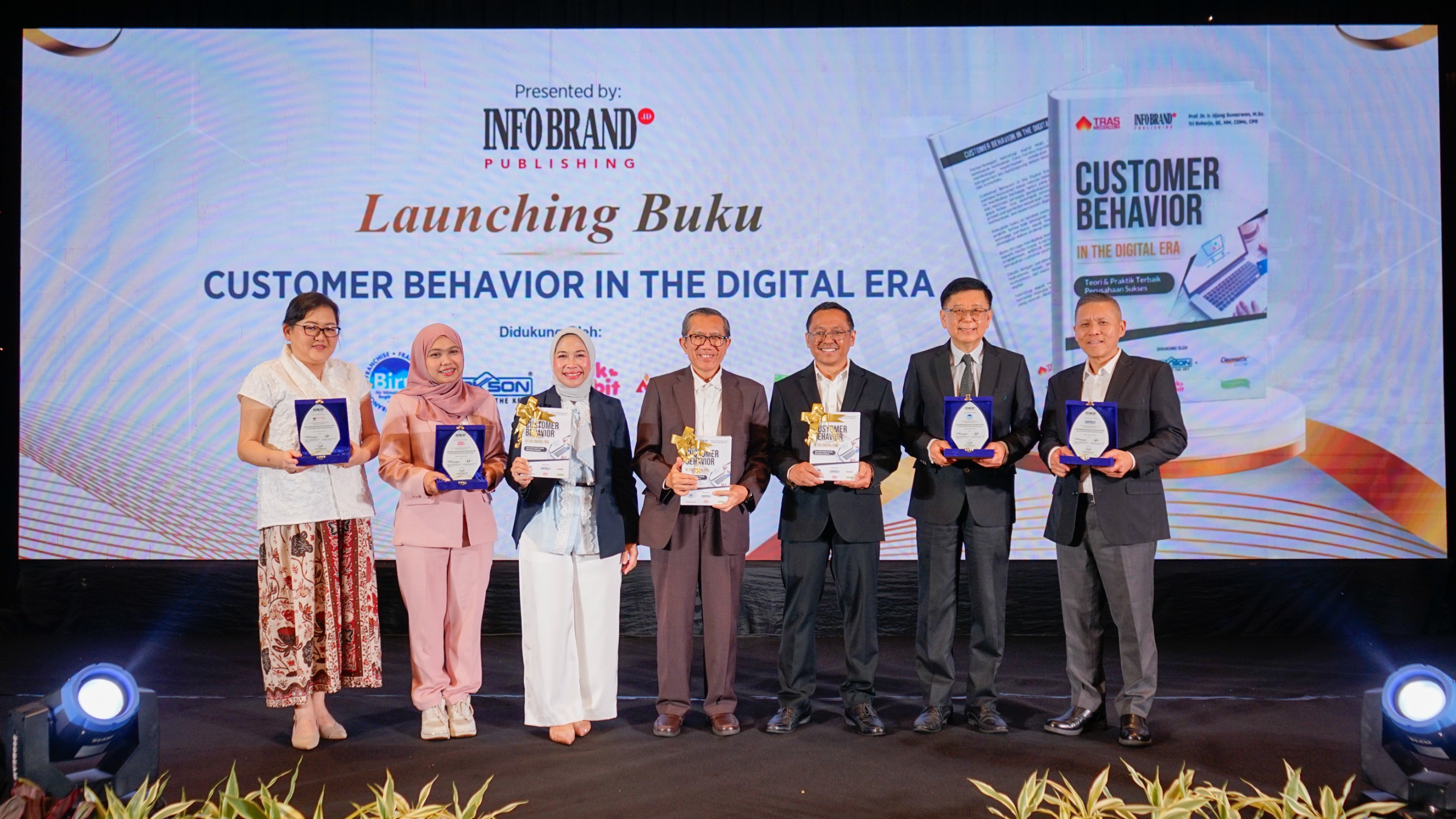
Jakarta, ThedailyID — Understanding digital consumers has become increasingly important as online platforms reshape how people search, compare and purchase products.
Media Infobrand Group has launched “Customer Behavior in The Digital Era: Theories & Case Studies of Successful Companies,” a 570-page book that examines these changes through academic research and business experience.


The book was co-authored by consumer behavior expert Prof. Dr. Ir. Ujang Sumarwan, M.Sc., and Tri Raharjo, S.E., M.M., CPR., CDMS, CEO of TRAS N CO Indonesia.
The authors combine consumer behavior theories with case studies from 20 prominent companies and brands in Indonesia. The approach aims to help business owners understand changing consumer patterns and apply them to their strategies.
Media Infobrand Group CEO Susilowati Ningsih said the book connects academic concepts with practical business decisions.
“The strength of this book lies in its ability to bridge academic theory with business reality,” Susilowati said in an official press release on Friday. “The discussion on consumer behavior does not stop at concepts and theories. It is translated into practice through lessons learned from 20 prominent companies and brands in Indonesia.”
Prof. Ujang said businesses also need to understand consumers beyond basic demographic information. He pointed to psychographics and digital interaction patterns as important factors in today’s market.
“This book outlines various classic and modern theories on motivation, perception, attitude, and loyalty formation, connecting them directly to today’s dynamics across digital platforms, social media, and e-commerce,” Ujang said.
He added that combining consumer theory with digital data analytics can support more accurate market penetration strategies.
Meanwhile, Tri Raharjo highlighted how digital platforms have changed the consumer decision-making process. Consumers can now research products independently before making a purchase.
“Today’s consumers tend to conduct independent research via search engines, digital reviews, and social media before making purchase decisions,” Tri said. “Therefore, a brand’s ability to manage its digital footprint and maintain trust in digital spaces is a key determining factor for brand success in the modern market.”
The book also features insights from several business leaders.
Lucky Nugroho, Brand Director of Dekkson, discusses how the company uses interactive digital communication to educate consumers, architects and contractors about its products.
Lydia Tjahaja, Consumer Health Director at Menarini, shares the company’s approach to digital education. The strategy focuses on evidence-based information to engage increasingly proactive consumers and build long-term loyalty.
Yantje Wongso, Brand Director of Depo Air Minum BIRU, explains how digital communication can support physical outlet operations. The approach responds to consumer demand for convenience and hygiene.
Dirda Muthi Kemala, Owner of Pink Rabbit, meanwhile, highlights the role of transparency, authentic reviews and responsive service in the beauty industry.
Together, the case studies show how businesses across different sectors are adapting their strategies as consumers become more digitally active.