

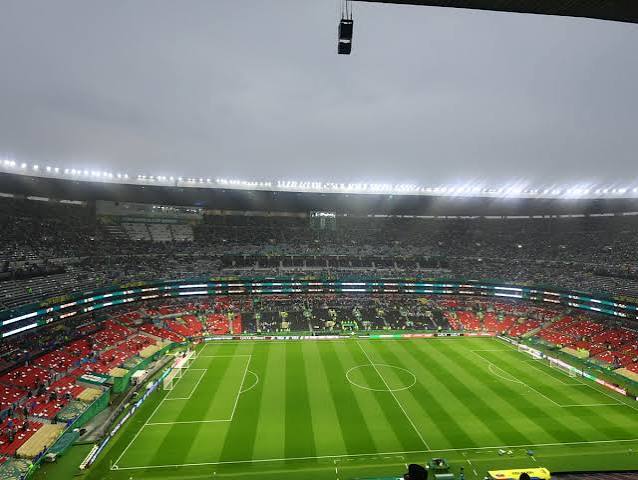
Jakarta, ThedailyID — Mexico and England will meet in the 2026 FIFA World Cup round of 16 at the historic Estadio Azteca, where the 2,040-meter altitude could play a decisive role in the match.
Both teams are chasing a place in the quarterfinals. Mexico hopes to continue its best-ever World Cup run, while England aims to move one step closer to winning a second world title.


The match will take place at Estadio Azteca, which previously hosted World Cup games in 1970 and 1986.
England head coach Thomas Tuchel acknowledged the challenge after his team’s victory over DR Congo in the round of 32. He said his squad would not have enough time to adapt physically to the high altitude.
“Of course it is a huge disadvantage because we cannot adapt physically in four days. That is impossible,” Tuchel said.
A day before the match, Tuchel admitted he experienced a mild headache after spending one night in Mexico City.
At an elevation of more than 2,000 meters above sea level, Mexico City has thinner air and lower oxygen levels. As a result, the body receives less oxygen with every breath.
The reduced oxygen supply limits aerobic performance and makes it harder for muscles to perform at peak levels.
According to Al Jazeera, footballers competing at high altitude often experience higher heart rates, shortness of breath, dehydration, faster fatigue, and slower recovery.
The thinner air also affects how the ball moves. Lower air resistance allows the ball to travel faster and farther than it would at lower elevations.
That change can alter passing accuracy, shooting power, and long-ball trajectories throughout the match.
Goalkeepers may face an even greater challenge because they must react to faster shots and more unpredictable ball movement.
“Maybe the ball will travel five meters farther than usual,” Tuchel said.