

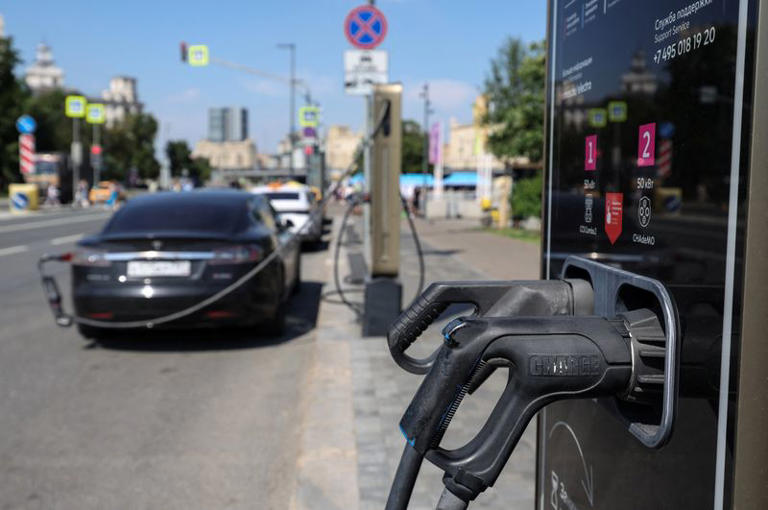
Jakarta, ThedailyID — Russia’s ongoing fuel crisis is reshaping consumer behavior. Soaring gasoline and diesel prices have sharply increased demand for Chinese electric vehicles (EVs), particularly in Moscow.
The disruption follows intensified Ukrainian attacks on Russia’s energy infrastructure in recent weeks. The attacks triggered long queues at gas stations, fuel rationing in several regions, and gasoline prices that Reuters estimates are among Europe’s highest.


Yevgeniy Zabelin, founder of EN Cars, said demand for electric vehicles has surged since fuel supplies became unstable.
“Since the fuel situation became complicated, demand has increased many times over,” Zabelin told Reuters. He said customers now seek both affordable and premium electric models.
The shift has significantly boosted sales at EN Cars, a dealership specializing in Chinese brands. The company now sells two to three EVs every day. Previously, it sold only two to three units per month.
Sergei Udalov, executive director of research firm Autostat, said sales of battery electric vehicles and plug-in hybrids continue to rise. However, manufacturers and importers struggle to keep pace because they did not anticipate such rapid demand.
“If the fuel crisis continues, sales will grow significantly in the near future, and China will benefit the most,” Udalov said.
Chinese manufacturers now dominate Russia’s EV market. According to Autostat, Geely, Dongfeng, GAC, and Chery lead electric and hybrid sales. Russia’s top-selling domestic EV, Evolute, uses assembly kits from Dongfeng.
Autostat and Russia’s Ministry of Industry and Trade reported plug-in hybrid sales reached 24,600 units between January and May 2026. The figure marked a 125% increase from the same period last year.
Sales of fully electric vehicles also climbed 19% year-on-year to 4,460 units.
Autostat chief Sergei Tselikov said buyers registered 1,754 new plug-in hybrids last week alone. That figure stood nearly 50% above this year’s weekly average as the fuel crisis intensified.
Despite stronger demand, Russia still faces major obstacles to wider EV adoption. Limited charging infrastructure, vast travel distances, and harsh weather continue to slow the transition.
Digital mapping service 2GIS reported the number of charging stations increased by 20% through July 2026. However, infrastructure growth still trails rising demand.
EV owner Vasiliy said he has avoided the fuel crisis because he charges his vehicle at home.
“Especially under the current circumstances, I haven’t experienced any problems at all,” he said. Even so, he believes the demand surge may prove temporary because Moscow still lacks sufficient public charging infrastructure.