

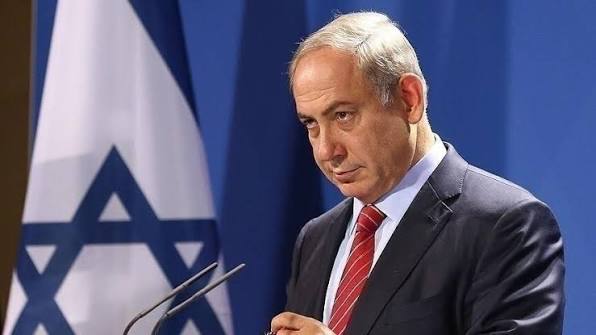
Jakarta, ThedailyID — Israeli opposition leader Gadi Eisenkot has accused Prime Minister Benjamin Netanyahu of misleading the public over Iran’s nuclear capabilities.
Speaking at a conference on Wednesday, Eisenkot claimed Netanyahu deliberately exaggerated the threat. According to him, the Israeli leader wanted to create fear among the public.

According to Yedioth Ahronoth, cited by Anadolu Agency, Eisenkot rejected Netanyahu’s repeated claim that Iran already has nuclear weapons.
“Netanyahu is saying outrageous things. Iran does not have a nuclear bomb. He is distorting reality to frighten the Israeli public,” Eisenkot said.
His criticism came one day after Netanyahu spoke with Israel’s Channel 14 television. During the interview, Netanyahu defended Israel’s recent military operations against Iran.
“I attacked Iran twice to save us from destruction by atomic bombs that were already in their possession,” Netanyahu said.
Meanwhile, Eisenkot recently announced his plan to run for prime minister. The former military chief served as head of the Israel Defense Forces from 2015 to 2019.
As a result, his remarks have intensified the political debate over Israel’s security strategy and its approach toward Iran.
The dispute also comes after months of regional tensions. On February 28, 2026, the United States and Israel launched coordinated strikes on Iranian military sites and strategic infrastructure.
Iran responded with retaliatory attacks. Consequently, both sides exchanged strikes for several days.
Earlier, Israel also carried out a large-scale military operation inside Iran in June 2025. Israeli officials said the campaign targeted Tehran’s nuclear facilities and missile capabilities.
However, Iran has consistently denied pursuing nuclear weapons. Instead, Tehran insists its nuclear program serves peaceful civilian purposes.
Likewise, international monitoring agencies have not confirmed that Iran possesses operational nuclear weapons.
Despite this, Iran’s nuclear program remains one of the most disputed security issues in the Middle East. As tensions continue, the disagreement between Netanyahu and Eisenkot highlights growing divisions within Israeli politics over how the government presents the Iranian threat.