

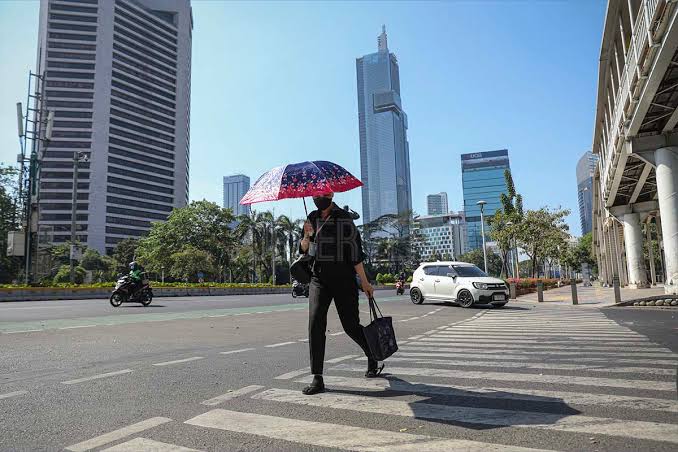
Jakarta, ThedailyID — Indonesia recorded its highest temperature of the year at 38.6 degrees Celsius as the dry season expanded across more parts of the country, the Meteorology, Climatology and Geophysics Agency (BMKG) said.
BMKG reported that 37.6% of Indonesia’s seasonal zones, or 263 Zona Musim (ZOM), have entered the dry season.

The highest temperature came from the Rendani Meteorological Station in Manokwari, Western Papua, on June 21.
Meanwhile, weather stations in West Kalimantan, East Kalimantan and North Kalimantan recorded maximum temperatures between 35°C and 35.5°C from June 22 to June 24.
According to BMKG’s latest 10-day climate analysis for late June, the dry season has expanded into parts of North Sumatra, Jambi, Banten, East Kalimantan and South Kalimantan.
The pattern has also spread across parts of North Sulawesi, Central Sulawesi, South Sulawesi, Southeast Sulawesi, Gorontalo and Maluku.
BMKG linked the expansion to changing global atmospheric conditions.
The agency said the Niño 3.4 sea surface temperature anomaly reached +1.61°C during the second 10-day period of June. The reading confirms El Niño conditions and signals lower rainfall across many parts of Indonesia.
BMKG expects rainfall to remain below 50 millimeters every 10 days in many regions over the coming weeks.
The forecast covers parts of Sumatra, Banten and East Nusa Tenggara. Similar conditions could also affect parts of Kalimantan, Sulawesi, Maluku, North Maluku and Papua.
Meanwhile, BMKG expects El Niño to continue into early 2027.
Based on its June assessment, the agency estimates a 98% chance that El Niño will remain at moderate strength. It also estimates a 62% chance that the event will strengthen further.
However, BMKG said the weather pattern will mainly affect Indonesia during the dry season through October 2026.
Australia’s Bureau of Meteorology has also warned that El Niño has developed across the tropical Pacific. The bureau said the event could become one of the strongest in seven decades during the second half of 2026.
Scientists also warn that climate change could intensify El Niño’s impact. They expect hotter and drier weather across Asia, while parts of the Americas could receive heavier rainfall.