

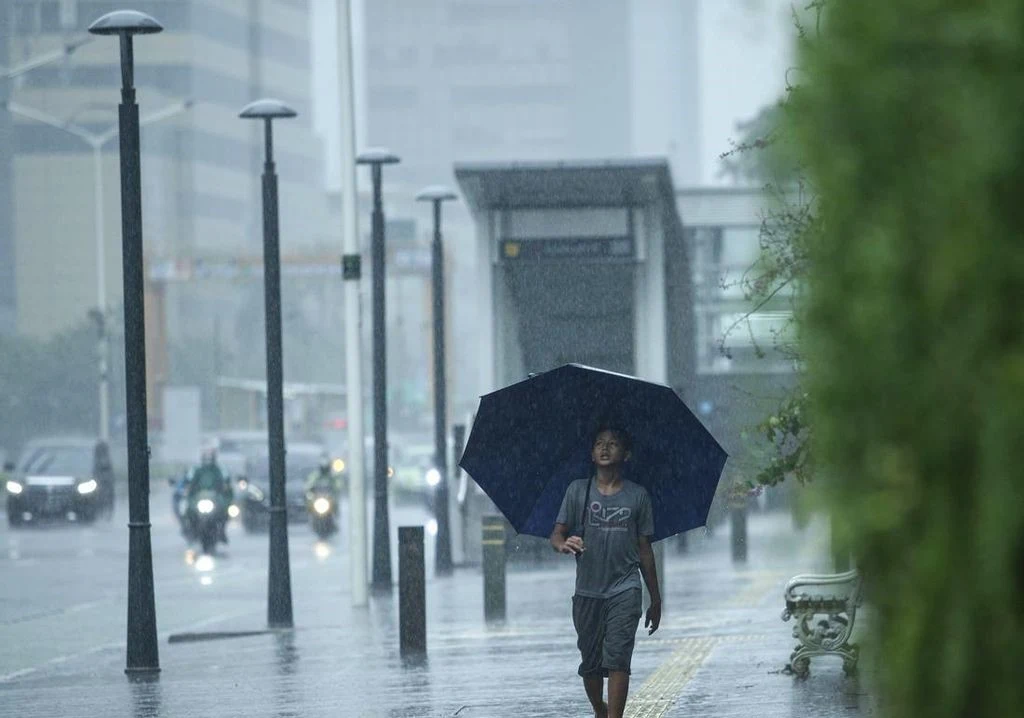
Jakarta, ThedailyID — Extreme rainfall continues affecting several regions in Indonesia despite ongoing El Niño conditions that usually trigger drier weather across the country.
According to meteorologists, multiple climate factors currently influence Indonesia’s weather patterns at the same time. As a result, heavy rain and extreme weather still appear in many areas even during the El Niño period.


Indonesia’s Meteorology, Climatology, and Geophysics Agency, locally known as Badan Meteorologi, Klimatologi, dan Geofisika (BMKG), explained that local atmospheric conditions remain highly active in recent weeks.
Experts said warm sea surface temperatures around Indonesian waters continue supplying large amounts of moisture into the atmosphere. The condition increases cloud formation and rainfall intensity in several regions.
Meanwhile, atmospheric waves and wind circulation patterns also contribute to unstable weather conditions across Indonesia.
Meteorologists explained that El Niño does not always eliminate rainfall completely. Instead, the climate phenomenon mainly reduces rainfall levels in broader seasonal patterns.
Therefore, certain regions can still experience intense rain, thunderstorms, floods, and strong winds despite the presence of El Niño.
BMKG also noted that Indonesia’s tropical geography naturally supports rapid cloud growth and high rainfall potential throughout the year.
In addition, climate experts highlighted the growing influence of global climate change on weather anomalies worldwide. Rising global temperatures may increase the frequency and intensity of extreme weather events in many countries, including Indonesia.
Several regions in Indonesia recently experienced floods, landslides, and severe weather caused by prolonged heavy rainfall.
Authorities continue urging residents to remain alert, especially in disaster-prone areas vulnerable to flooding and landslides.
Meanwhile, BMKG advised the public to monitor official weather forecasts regularly because weather conditions may change rapidly during transitional periods.
Experts also reminded communities not to assume El Niño always means constant drought or hot weather every day.
The agency expects extreme weather potential to continue appearing in several Indonesian regions over the coming weeks.