

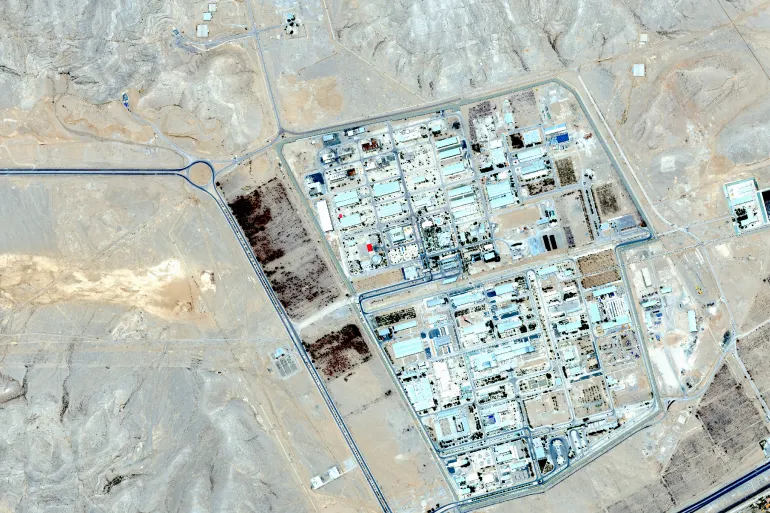
Jakarta, ThedailyID — Uranium has once again become a major topic in global politics amid rising tensions between the United States and Iran. However, experts say the radioactive element serves many purposes beyond nuclear weapons.
Countries consider uranium one of the world’s most strategic resources because it can generate massive amounts of energy and support advanced technologies.


The most common use of uranium involves nuclear power plants. Processed uranium fuel powers nuclear reactors that generate electricity through nuclear fission. Many governments see nuclear energy as a cleaner alternative to fossil fuels because reactors produce lower carbon emissions.
Indonesia has also started exploring nuclear energy development in recent years. The government currently studies Small Modular Reactor (SMR) technology and potential domestic uranium resources to support future energy security.
Outside the energy sector, uranium also supports medical and industrial technology. Nuclear materials help doctors perform cancer treatments, medical imaging, and sterilization processes in hospitals and laboratories.
Meanwhile, several countries use uranium in military systems, including nuclear submarines and advanced defense technology. Highly enriched uranium can also become material for nuclear weapons, which makes enrichment programs highly sensitive politically.
The current dispute involving Iran mainly focuses on uranium enrichment levels. Uranium enrichment increases the concentration of uranium-235, the isotope needed for reactors and potentially nuclear weapons.
Researchers from National Research and Innovation Agency (BRIN) recently warned that Iran’s reported enrichment level of 60 percent has approached weapons-grade territory.
“If it has already reached 60 percent, then it is already very close,” BRIN researchers said while discussing uranium enrichment levels linked to nuclear weapons development.
Most civilian nuclear reactors only require low-enriched uranium. By comparison, nuclear weapons generally require enrichment levels above 90 percent.
Despite its benefits, uranium also carries environmental and health risks. Mining and processing activities can release radioactive materials if operators fail to manage them properly.
Scientists warn that long-term radiation exposure may increase the risk of cancer, organ damage, and environmental contamination.
As geopolitical tensions continue rising, uranium remains both a valuable energy resource and one of the world’s most controversial strategic materials.