

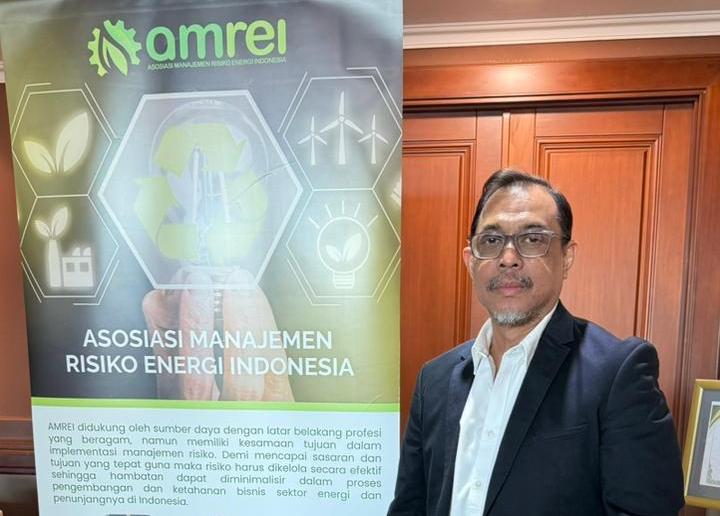
Jakarta, ThedailyID — Indonesian Energy Risk Management Association (AMREI) is pushing for stronger risk culture in Indonesia’s energy sector to support national development and prevent potential systemic crises. The organization said improving risk awareness can help safeguard fiscal stability, business continuity, and long-term development.
It also stressed the importance of maintaining down-streaming and industrialization programs amid increasingly complex global dynamics. Chairman Rifky Assamady said AMREI is preparing a policy brief for government institutions, which will offer recommendations to strengthen risk governance in the energy sector.


He emphasized that effective risk management starts with individual awareness. “Risk management begins with a sense of ownership and awareness in every individual,” he said. He added that teams should focus on efficient strategies, especially under budget constraints. “When budgets are cut, risk management becomes critical. We prioritize risks and focus on high-impact actions with efficient costs,” he said.
AMREI also plans to collaborate with universities to introduce risk management as a key skill for students. The organization said this step can strengthen long-term energy resilience and national stability.
Meanwhile, Secretary General Mohamad Soleh said AMREI recently held a national training program on risk culture and development risk management in Jakarta on April 1, 2026. The event involved government institutions, state-owned enterprises, and energy sector stakeholders.
“We organized this training to raise awareness of risk strategies in the energy sector,” he said. He warned that an energy crisis could trigger broader economic disruption. “If oil prices surge, fiscal pressure could rise and disrupt businesses and society,” he said.
He added that institutions must adopt risk-aware behavior to prevent small risks from escalating. AMREI also uses interactive methods, including board games, to improve understanding of risk management. Participants share experiences and learn the impact of their decisions in a practical way.
“This approach engages both logic and emotion, making risk awareness more effective,” he said.
AMREI now encourages broader implementation of national risk management frameworks. Existing regulations support this framework, including Presidential Regulation No. 39 of 2023. The organization said cross-sector collaboration remains key to managing development risks effectively.