

Jakarta, ThedailyID — Learning can be difficult to maintain as a daily habit. Duolingo co-founder Luis von Ahn believes education can become more engaging by using techniques popularized by social media and mobile games.
Von Ahn discussed the approach in his TED talk, “How to Make Learning as Addictive as Social Media.” He explained how Duolingo uses behavioral techniques to encourage people to keep learning.


Von Ahn grew up in Guatemala and later studied computer science in the United States. His personal experience with education influenced his decision to create a platform that could provide wider access to learning.
He initially considered teaching subjects such as mathematics and computer science. However, he and his co-founder eventually chose foreign languages.
According to von Ahn, around 2 billion people worldwide learn a foreign language. Most of them study English, which can also increase income opportunities in many countries.
The team also wanted to make education accessible through smartphones. Building schools in every part of the world would cost too much, while smartphones already reach a large share of the global population.
That idea led to Duolingo. The platform uses a freemium model, allowing users to study without paying. Users who do not subscribe may see advertisements, while subscribers can remove them.
However, smartphones create another challenge. Users can easily choose entertainment apps instead of educational content.
Von Ahn compared the problem to eating broccoli next to an appealing dessert. If education is going to compete for attention, he argued, it needs to become more enjoyable.
“What we’ve done is that we’ve used the same psychological techniques that apps like Instagram, TikTok or mobile games use to keep people engaged, but in this case, we use them to keep people engaged but with education,” von Ahn said in his TED talk, as reported on Tuesday, September 22.
One of Duolingo’s most important techniques is the streak. A streak counts how many consecutive days a user completes an activity.
Missing a day can reset the counter. This encourages users to return and protect their streak.
Von Ahn said more than 3 million Duolingo users had streaks lasting longer than 365 days at the time of his TED talk.
Notifications are another important tool. Duolingo uses an AI system to determine when to send reminders and what messages to use.
According to von Ahn, the most effective reminder time turned out to be about 24 hours after the previous session.
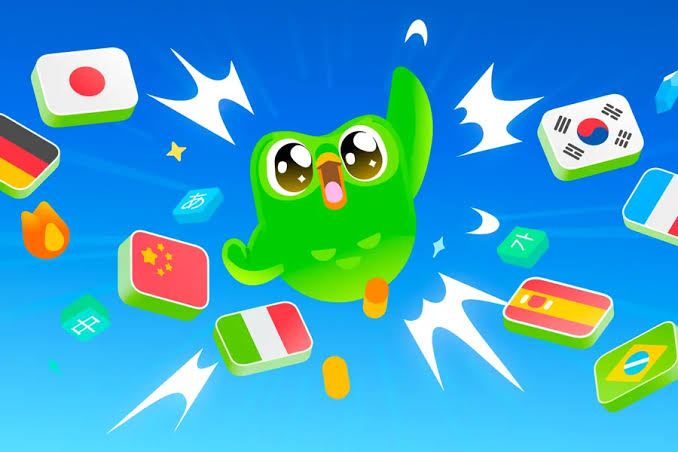
The company also stops sending reminders after seven days of inactivity. However, Duolingo sometimes uses humorous messages from its green owl mascot to encourage users to return.
Von Ahn said these messages can make users feel as though the mascot has given up on them. That reaction can motivate them to return to their lessons.
The strategy has also created thousands of internet memes and comedy sketches. Von Ahn said this helped Duolingo become part of popular internet culture.
However, he does not believe educational apps can completely match the engagement of TikTok, Instagram, or mobile games.
Instead, education has another advantage: meaning.
“When you’re learning something, you get meaning out of it,” von Ahn said.
He argues that education does not need to become more engaging than entertainment. It may only need to become engaging enough for people to keep returning.
Von Ahn hopes the same approach can eventually apply beyond language learning. Subjects that require repeated practice, such as reading and elementary mathematics, could potentially use similar gamification techniques.
For subjects that rely more on explanations, he said different approaches may be necessary. Educational videos could be one possible solution.
His broader vision is a future where screen time does not automatically mean wasted time. Instead, smartphones could become tools that provide high-quality education to people regardless of their financial background.
Source: TED, How to Make Learning as Addictive as Social Media | Luis von Ahn