

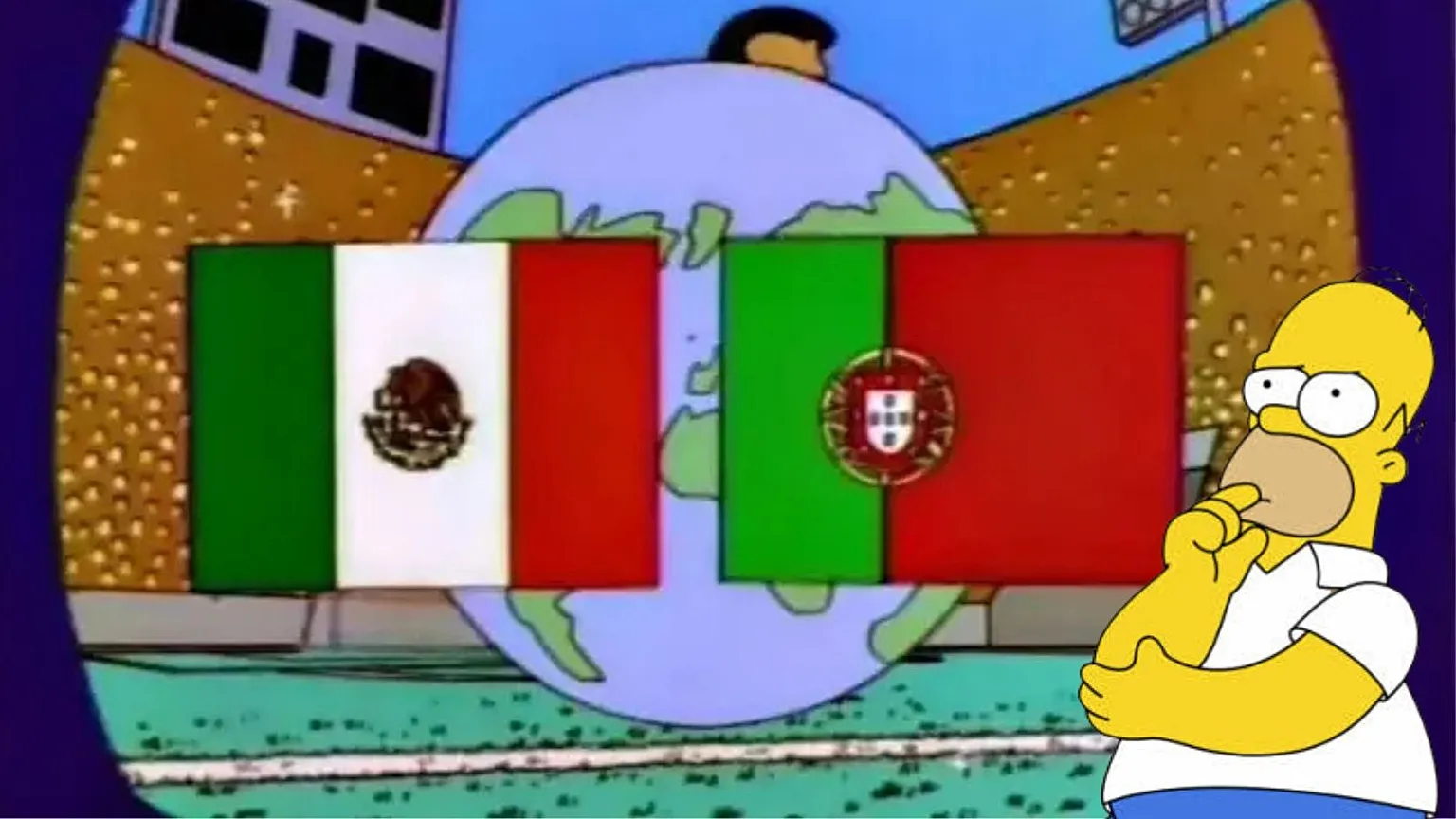
Jakarta, ThedailyID — A viral social media post claims that The Simpsons predicted the 2026 FIFA World Cup final. The claim has spread widely across platforms. However, it is false and relies on edited footage taken from an episode that aired nearly three decades ago.
The rumor points to “The Cartridge Family,” the fifth episode of Season 9, which first aired on November 2, 1997. In the episode, the Simpson family watches a television commercial promoting a soccer match in Springfield. The advertisement describes the game as a contest to determine “which country is the greatest on Earth.”


How the Claim Started
Many users connected the fictional match to the 2026 FIFA World Cup. They claimed the episode predicted a final between Mexico and Portugal. The theory gained attention because Mexico is one of the tournament’s host nations. In addition, both teams could still meet in the final based on the current knockout bracket.
However, the original episode never mentions the FIFA World Cup. It also does not reference a championship final or the year 2026. Internet users digitally inserted those details into edited clips that later circulated online.
The Same Hoax Has Returned Before
This is not the first time the claim has appeared. The same screenshots and video clips resurfaced before the 2018 FIFA World Cup in Russia and again ahead of the 2022 tournament in Qatar.
Some posts also claimed the episode referenced Cristiano Ronaldo. That theory is inaccurate. Ronaldo was only 12 years old when the episode premiered in 1997, and the storyline never mentions him.
What Really Happens in the Episode
In the original story, the Mexico-versus-Portugal match turns into a joke. The game becomes so boring that spectators start a riot inside Springfield Stadium. The episode never reveals a winner. It also never shows a trophy ceremony or declares either team world champion.
Meanwhile, the real 2026 FIFA World Cup final is scheduled for July 19, 2026, at MetLife Stadium in East Rutherford, New Jersey.
The latest viral claim highlights how edited clips and recycled screenshots can easily create misleading narratives. As a result, viewers should verify viral posts before accepting them as factual.